

Psychological distress in the Netherlands is not some abstract idea. It hits everywhere—families, schools, workplaces. Behind every graph is an individual of flesh and blood. The latest figures from the national research institutes in public health (RIVM) and mental health (Trimbos) are unequivocal: one in four adults struggled with a mental health condition in the past year. Among young adults, this figure is as high as one in three.
Anyone working with that reality on a daily basis is familiar with the urgency of the situation. Psychiatrist Dyllis van Dijk is one of them. She defended her PhD dissertation on outpatient depression care in October, but the questions she investigated—waiting times, dropout rates and treatment planning—are more topical than ever.
Waiting times
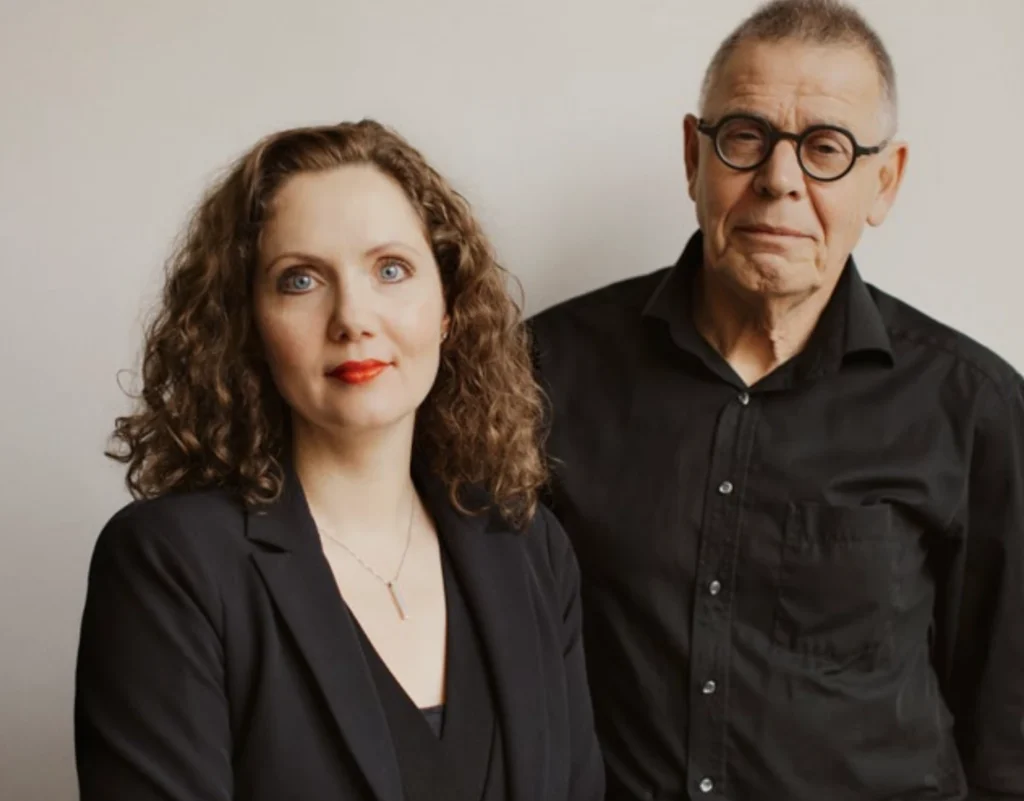
Reason enough to reflect on a process that spanned 10 years. We speak on Teams. Van Dijk appears first, calling in from her office near The Hague. Later, her PhD supervisor Frenk Peeters, emeritus professor of psychiatry at Maastricht University, joins from his spacious attic. The first question is unavoidable: wasn’t this dissertation’s angle—the impact of waiting times—rather like pushing at an open door?
Van Dijk smiles. “I understand that reaction. Anyone can surmise that a long wait isn’t good. But as far as we could tell, nobody had systematically studied what waiting times actually do to treatment outcomes in everyday practice.” Peeters agrees. “In healthcare, we make a lot of assumptions. We say long waiting times are harmful, but we didn’t have any hard data. Science begins where assumptions end.”
The study linked longer waits to poorer outcomes, regardless of the severity of the depression. Another striking finding: once treatment begins, around 15% of patients drop out. “And these are not necessarily people who’ll get better on their own,” Van Dijk says. “Often they’ve been around the system for a long time, or they’ve been let down by earlier care. They return later with symptoms that are harder to treat. That costs time and money, and it affects their quality of life.”
Data and diagnostics
Peeters puts it more bluntly. “Our healthcare system is exceptionally wealthy compared to many other countries. That’s great, but there’s no free lunch. If you enter treatment, you also have to commit to it—just as practitioners have to use time and guidelines responsibly.”
A key tool in the dissertation was the DM-TRD, a short questionnaire that maps factors relevant to the current treatment. “It’s basically a route planner,” Van Dijk says. “It helps to prevent a return to ineffective treatments and gives a clear overview of where someone is in their treatment journey.”
Science begins where assumptions end.
 What about the Diagnostic and Statistical Manual of Mental Disorders (DSM), the standard handbook for mental health professionals? “The DSM is a map,” Peeters says. “Without a map you get lost, but you shouldn’t confuse the map with the actual landscape. It helps you find your bearings, but it isn’t reality.”
Van Dijk likes that image. “You need a shared language for research and comparison, but in the consulting room you have to look beyond it: at the patient’s work, relationships, financial stress, trauma. That entire landscape is part of the diagnostic picture.”
Journey through time
Van Dijk was an external PhD candidate, combining the research with her work as a psychiatrist and later as a medical director. Her organisation, PsyQ, which is part of the Parnassia Group, provided her with the opportunity to dedicate one day per week to research. “I felt really supported. That time allowed me to connect my research directly to questions from everyday practice. I still did a lot of early mornings, and worked evenings and weekends. But these days it’s quite something for an organisation to accommodate you like that.”
Life carried on in the meantime, too. Her sister had a serious accident that left her with permanent brain damage. Later, her daughter was diagnosed with leukaemia. “I don’t want to make a thing of it, but that’s what landed on my plate. The research gave me continuity, something to hold on to. And most importantly: my daughter is doing well now.”
Over time, the research evolved. The original plan—to develop a decision-support tool in collaboration with a company—turned out to be less feasible than expected. Developing and validating an instrument with commercial partners involved more time, coordination and complex data issues than the PhD programme could accommodate. “That’s how it goes,” Peeters says of the resulting course adjustment. “The core remained intact: using data from the real world to make healthcare more meaningful and efficient.”
That link between science and practice is what makes this project special. “A lot of research in mental healthcare never really reaches the consulting room. And as a practitioner, you come across questions you wouldn’t necessarily encounter in a university setting,” Peeters says. “External PhD candidates can help to close that gap.” It’s clear the pair challenged each other intellectually and valued each other personally—a combination that isn’t always a given in PhD projects.
Van Dijk now links science with practice on a daily basis. “I’m still doing research as an extension of the PhD, mainly practice-oriented analyses of treatment outcomes and the organisation of care. I might not have done that without the doctorate. And my organisation values it: it helps us to base policy on data rather than intuition.”
Maybe that’s the heart of it: healthcare needs time and scientific insight, but it can’t wait forever. After all, psychological distress can’t simply be put on hold.